
 Image 1 of 5
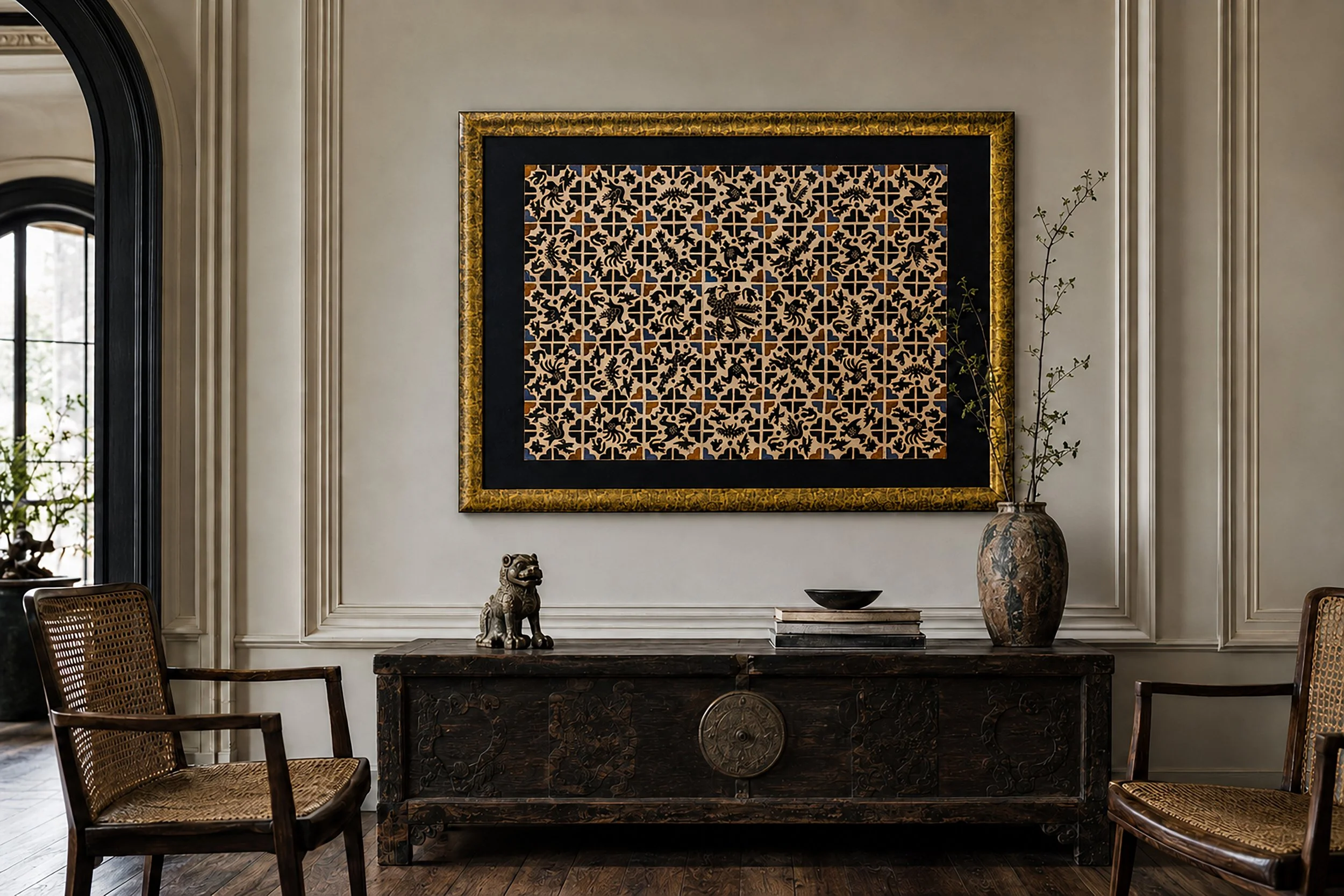 Image 2 of 5
 Image 3 of 5
 Image 4 of 5
 Image 5 of 5
Guangxi Province, China — Early 20th Century
This striking textile originates from the Miao ethnic communities of Guangxi Province in southern China. Traditionally created by women as part of a wedding dowry, Miao quilts are deeply symbolic works that combine decorative beauty with cultural storytelling.
Each quilt is composed of hand-loomed cotton dyed with natural vegetable pigments and assembled through intricate hand sewing. The individual quilt panels are carefully cut and arranged to depict animals and symbolic motifs commonly found in Miao visual culture, including dragons, butterflies, birds, bats, squirrels, and other mythical or natural creatures.
No two quilts are ever identical. Each composition reflects the creativity of the woman who created it and expresses hopes for prosperity, protection, fertility, and happiness in married life.
This particular example dates to the early twentieth century and has been thoughtfully presented within a contemporary gilt carved wood frame with black linen matting. The framing transforms the textile into a dramatic wall-mounted artwork while preserving the integrity of the historic fabric.
The juxtaposition of rustic hand craftsmanship with a refined modern presentation makes the piece particularly effective in contemporary interiors.
The textile remains in very good antique condition with expected signs of age consistent with early twentieth-century hand-woven fabrics.
This piece functions beautifully as a large-scale textile artwork in living rooms, corridors, bedrooms, or gallery-style interiors where its intricate patterns and cultural symbolism can be appreciated.
Height: 150 cm
Width: 100 cm
Guangxi Province, China — Early 20th Century
This striking textile originates from the Miao ethnic communities of Guangxi Province in southern China. Traditionally created by women as part of a wedding dowry, Miao quilts are deeply symbolic works that combine decorative beauty with cultural storytelling.
Each quilt is composed of hand-loomed cotton dyed with natural vegetable pigments and assembled through intricate hand sewing. The individual quilt panels are carefully cut and arranged to depict animals and symbolic motifs commonly found in Miao visual culture, including dragons, butterflies, birds, bats, squirrels, and other mythical or natural creatures.
No two quilts are ever identical. Each composition reflects the creativity of the woman who created it and expresses hopes for prosperity, protection, fertility, and happiness in married life.
This particular example dates to the early twentieth century and has been thoughtfully presented within a contemporary gilt carved wood frame with black linen matting. The framing transforms the textile into a dramatic wall-mounted artwork while preserving the integrity of the historic fabric.
The juxtaposition of rustic hand craftsmanship with a refined modern presentation makes the piece particularly effective in contemporary interiors.
The textile remains in very good antique condition with expected signs of age consistent with early twentieth-century hand-woven fabrics.
This piece functions beautifully as a large-scale textile artwork in living rooms, corridors, bedrooms, or gallery-style interiors where its intricate patterns and cultural symbolism can be appreciated.
Height: 150 cm
Width: 100 cm