Japan — Late 19th to Early 20th Century
This striking example of samurai dō-maru armour dates to the Meiji period and follows the traditional construction originally developed for mounted samurai archers.
The central element of the armour, the hotoke dō (the cuirass consisting of chestplate and backplate), is formed from six moulded lacquered brass plates joined together with braided cotton lacing. The armour opens on the right side and closes on the left with traditional braided cords.
Suspended from the cuirass are six articulated kusazuri, protective skirt plates designed to shield the upper thighs and hips while allowing freedom of movement. These elements are attached to the armour with braided cotton cords in the traditional manner.
Both the kusazuri and the muna-ita, the upper section of the cuirass, are decorated with exposed brass bands featuring ribbed and serrated detailing. The uppermost portion of the muna-ita retains its original painted decoration depicting interlaced floral motifs and stylized tiger heads—imagery associated with the heraldic symbolism of the samurai clans.
The shoulder guards retain their original quilted silk coverings and remain attached to the cuirass with braided cords.
During the Meiji era, armour such as this was often preserved as a symbol of Japan’s martial heritage following the dissolution of the samurai class in 1876. Today these pieces are appreciated both as historical artifacts and as examples of the refined craftsmanship of Japanese armourers.
Condition
The armour remains in excellent preserved condition with minor restoration to several of the braided cords securing the side and shoulder elements.
Ideal Placement
With its dramatic sculptural form and historical presence, the armour works beautifully as a display object in collectors’ interiors, libraries, galleries, or hospitality spaces where historical artifacts are incorporated into the design narrative.
Japan — Late 19th to Early 20th Century
This striking example of samurai dō-maru armour dates to the Meiji period and follows the traditional construction originally developed for mounted samurai archers.
The central element of the armour, the hotoke dō (the cuirass consisting of chestplate and backplate), is formed from six moulded lacquered brass plates joined together with braided cotton lacing. The armour opens on the right side and closes on the left with traditional braided cords.
Suspended from the cuirass are six articulated kusazuri, protective skirt plates designed to shield the upper thighs and hips while allowing freedom of movement. These elements are attached to the armour with braided cotton cords in the traditional manner.
Both the kusazuri and the muna-ita, the upper section of the cuirass, are decorated with exposed brass bands featuring ribbed and serrated detailing. The uppermost portion of the muna-ita retains its original painted decoration depicting interlaced floral motifs and stylized tiger heads—imagery associated with the heraldic symbolism of the samurai clans.
The shoulder guards retain their original quilted silk coverings and remain attached to the cuirass with braided cords.
During the Meiji era, armour such as this was often preserved as a symbol of Japan’s martial heritage following the dissolution of the samurai class in 1876. Today these pieces are appreciated both as historical artifacts and as examples of the refined craftsmanship of Japanese armourers.
Condition
The armour remains in excellent preserved condition with minor restoration to several of the braided cords securing the side and shoulder elements.
Ideal Placement
With its dramatic sculptural form and historical presence, the armour works beautifully as a display object in collectors’ interiors, libraries, galleries, or hospitality spaces where historical artifacts are incorporated into the design narrative.

 Image 1 of 8
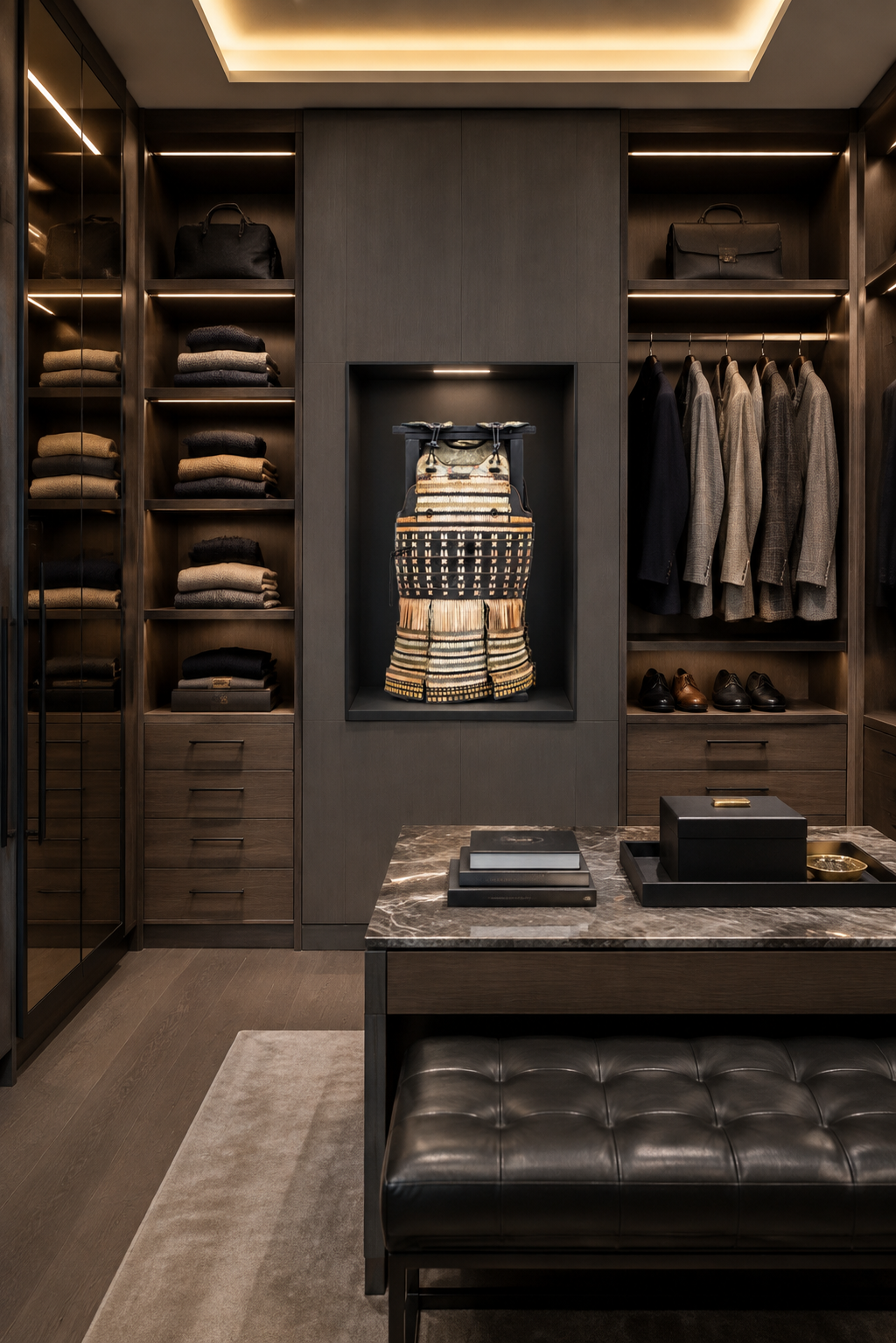 Image 2 of 8
 Image 3 of 8
 Image 4 of 8
 Image 5 of 8
 Image 6 of 8
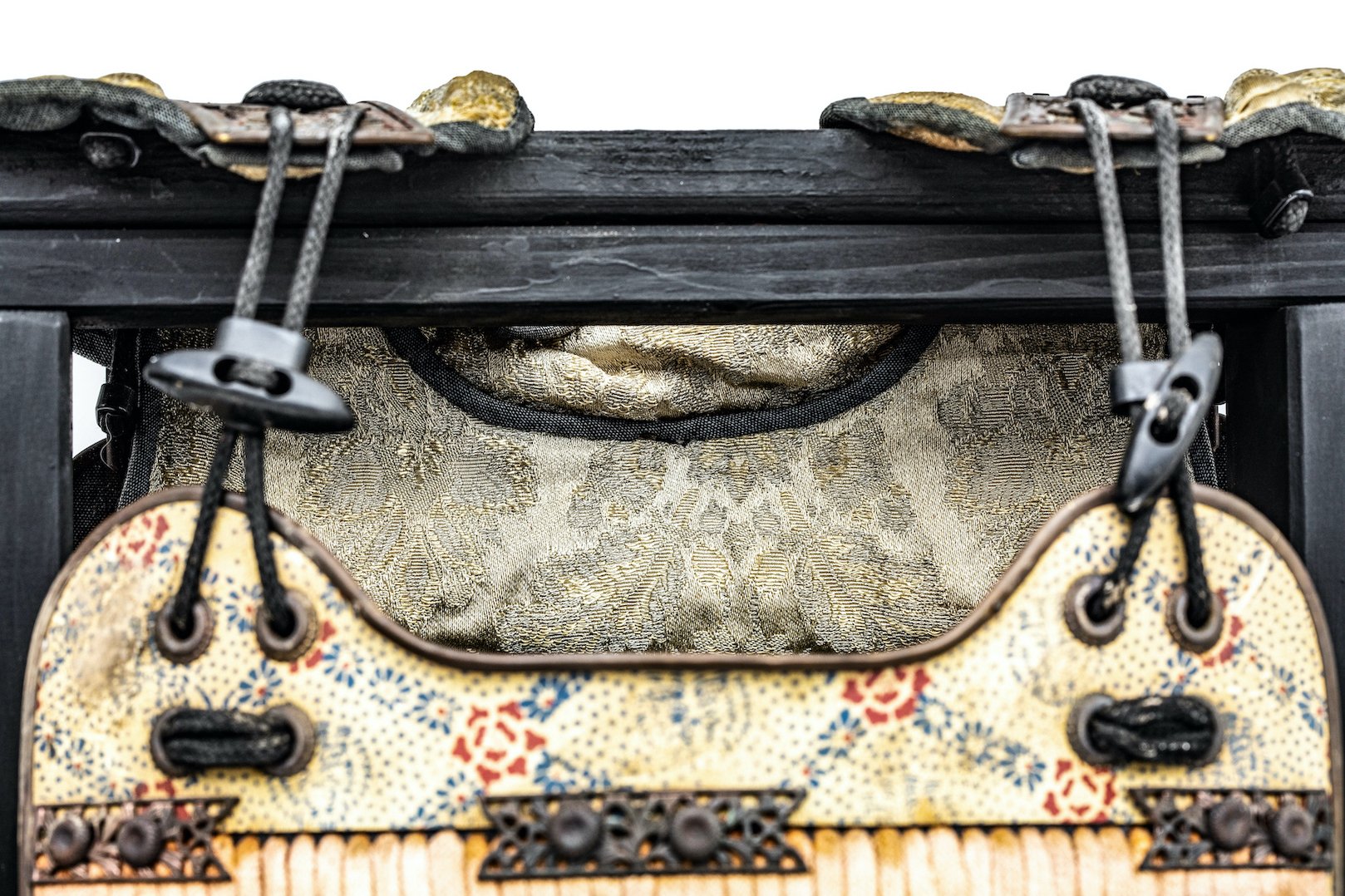 Image 7 of 8
 Image 8 of 8