
 Image 1 of 5
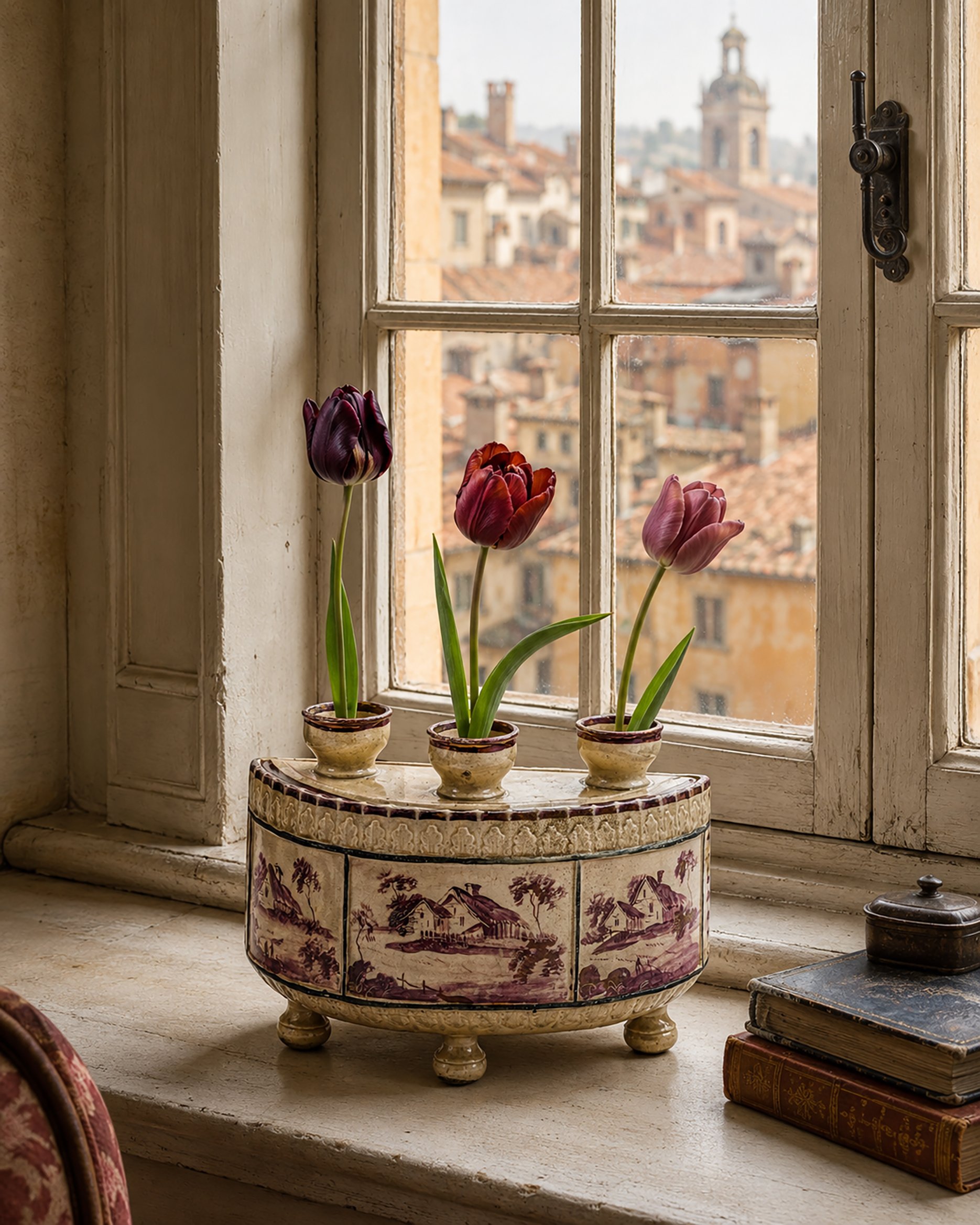 Image 2 of 5
 Image 3 of 5
 Image 4 of 5
 Image 5 of 5
Netherlands — Mid 19th Century
This rare half-moon shaped tulip vase was produced in the Netherlands during the mid-nineteenth century. The unusual curved form is designed to sit flush against a wall or mirror, allowing the flowers to fan outward in an elegant display.
The ceramic surface is finished in a warm sepia tone and decorated with delicate scenes of rural Northern European life. These pastoral motifs reflect the traditional decorative language of nineteenth-century Dutch ceramics, which often celebrated the agrarian landscapes that surrounded the great tulip-growing regions of the country.
The vase is composed of two elements: the primary vessel and a removable lid designed with multiple openings to hold individual tulip stems. This system allows each flower to stand independently, creating the sculptural floral arrangements that made tulip vases so prized during the centuries following the famous Dutch tulip trade.
The elegant curved silhouette and refined decoration make this piece both a functional vessel and a charming decorative object.
The vase is in excellent antique condition with minor signs of age consistent with its period.
Because of its half-moon form, the vase works beautifully placed against a wall, mirror, or on a console table where the arrangement of flowers can fan outward into the room.
Netherlands — Mid 19th Century
This rare half-moon shaped tulip vase was produced in the Netherlands during the mid-nineteenth century. The unusual curved form is designed to sit flush against a wall or mirror, allowing the flowers to fan outward in an elegant display.
The ceramic surface is finished in a warm sepia tone and decorated with delicate scenes of rural Northern European life. These pastoral motifs reflect the traditional decorative language of nineteenth-century Dutch ceramics, which often celebrated the agrarian landscapes that surrounded the great tulip-growing regions of the country.
The vase is composed of two elements: the primary vessel and a removable lid designed with multiple openings to hold individual tulip stems. This system allows each flower to stand independently, creating the sculptural floral arrangements that made tulip vases so prized during the centuries following the famous Dutch tulip trade.
The elegant curved silhouette and refined decoration make this piece both a functional vessel and a charming decorative object.
The vase is in excellent antique condition with minor signs of age consistent with its period.
Because of its half-moon form, the vase works beautifully placed against a wall, mirror, or on a console table where the arrangement of flowers can fan outward into the room.